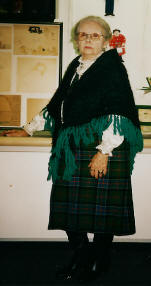
MARY SINCLAIR (1914-2004) A Detroit native, Mary Sinclair (1914-2004) grew up in Connecticut. She lost her father, Samuel Eastwick Sinclair, at the Second Battle of the Marne in 1918. Her mother, Grace Elizabeth Williams, was a commercial artist. She married again, to colleague George Annand. Mary Sinclair was Annand’s model for the now iconic National Biscuit Company’s child in a yellow raincoat. Sinclair started to make art seriously as a child; she was nine years old when New York’s Macy’s Department Store incorporated her drawing The Queen into one of their advertisements.
After graduating from Darien High School, Connecticut, Sinclair attended the Art Students League, New York City, from 1931 to 1933. There she met fellow student Will Barnet (1911-2012); they were married from 1933 to 1952. In the 1930s and 40s Sinclair taught art at the Birch Wathen School, NY (now the Birch Wathen Lenox School). Her second marriage, in the early 1950s was to the doctor and artist Joshua Epstein.
Sinclair had six children: Peter, Richard, Todd, Mary Elizabeth (Betsy), Margaret (Peggy), and Judith. Peter Barnet and Richard Barnet both became artists. Her children, her home, and her Union City,
New Jersey, neighborhood, were Sinclair’s most important subjects. She considered herself an impressionist. Richard Barnet noted that the skill and beauty of Mary Sinclair’s drawing-in-color does not stand alone. Rather, central to her work are the compositions. She always builds powerful designs from these elements: people and the places they inhabit.
Throughout her life Sinclair was an active member of the artists’ community and she participated in group shows across the country. At the National Arts Club, NY, a work received the Best Oil Painting Award, 1975, and two pieces were included in American Modernist Drawings, at the Susan Teller Gallery, September 3–28, 2013. Sinclair had one-person shows at the New School for Social Research, the Van Diemen Lilienfeld Galleries (with Joshua Epstein), 1950, the Hilda Carmel Gallery, the Education Alliance of New York, the Carl Ashby Gallery, NY; the College of Mount Saint Vincent, 1992, Riverdale, NY (which also has a work by Sinclair in their permanent collection); and the Robert Hutchins Gallery, Maplewood, NJ, 1996.
Written by The Susan Teller Gallery
An Introduction to the Paintings of Mary Sinclair
2003 by Richard Sinclair Barnet
Part 1: Reflections on Photographing Mary Sinclair’s Paintings
Mary Sinclair has been an artist for most of nine decades. At age eighty-nine she no longer paints, due to somewhat diminished eyesight, but she continues to love art and the world around her. In July, 2003, I began to photograph Mary Sinclair’s paintings, at the request of our friend Susan Jennings, who also wants to bring Sinclair’s work to a wider audience. What began for me as a project with overtones of being something of a familial chore — I am Mary Sinclair’s son — has become for me an unexpected journey of discovery and revelation.
I have followed Ms. Jennings’ suggestion to photograph mainly Sinclair’s paintings of interiors — often with people in them. The photographs (slides) represent only a small fraction of Sinclair’s scenes of interiors, and none of the large and elegant body of work in which she depicts landscapes and seascapes. The photographs thus may give a sense of “focus,” as a presentation of Sinclair’s work —
but they do not do justice to the wonderful breadth and depth of the entire body of her work.
The paintings seen in these photos were painted across six decades — from the early 1940’s to 1998. As I worked to photograph them, I had, of course, to spend some time with each painting, so as to “solve” photography questions such as what lighting to use (daylight), and what film exposure (normal). The vibrancy and clarity of Sinclair”s drawings and color made it easy, generally to “solve” these technical issues.
What became clear to me as I photographed and looked, is that Mary Sinclair is an artist who’s work has wonderful treasures to offer to a wide audience. She has exhibited a good deal across her career, and has sold over a hundred drawings and paintings, but she has not gained the recognition she deserves. That part of the public that
loves art, is poorer for this. Personally, I realized I had not previously appreciated my mother’s work for what it is: major painting of the twentieth century.
As we “leave” the twentieth century behind in time, there is still, for people who care about art and artists, the opportunity to discover and/or rediscover certain major talents. I hope that Mary Sinclair will live long enough to see her art before a much larger audience, and to see that it can help teach another generation how to look, and how to design, and how to paint.
Part II: Conversations with Mary Sinclair
To talk with Mary Sinclair is to discover a person who’s physical capacities, including eyesight and hearing, are somewhat diminished by age, but who has a lovely intellect, a fine and kind sense of humor, and a gift for exact and telling turn of phrase. These are all qualities of course, that have certain visual parallels in her paintings.
As I have talked with my mother about her life and painting recently, it has surprised me how often there have been aspects of her life and artwork that I hadn’t known or understood. Often these have stood side-by-side with that which I have known well. For example, when I asked Mary Sinclair what teachers at the Art Students League of New York were most influential on her, she said it wasn’t formal teachers at all — it was other students. She gave as advise to those who want to become artists: “Go to a school with good students. Otherwise don’t go.”
When I asked her about artists who’s work she loves and/or relates to her own, I was surprised, not only by her choice of artists, but especially by the great range of her knowledge of art and artists. She reminded me that during the fifteen years she and my father, Will Barnet, were married, they knew a great many artists, and went to hundreds of shows in galleries and museums. She maintained many of her friendships with artists during the more that thirty years of her second marriage, to Dr. Joshua Epstein, and also continued to go frequently to exhibitions. And she has continued to show her work, which has often brought her into contact with her contemporaries in art.
Some painters my mother especially likes, and who’s work she knows well (especially from the Metropolitan Museum of Art collections) are: Renoir, Monet, Manet, Degas, Velasquez, Vermeer, and Matisse. She is not particularly fond of Edward Hopper, nor of “the Ashcan School” painters (this was a surprise for me, as she knew some of them). To my questions “Do you like Picasso?”, she replied “not particularly.” She likes the sculpture of Maillol and Rodin. Although she has never worked “abstractly” — because of a very clear understanding of her own work — she does like the work of some abstract artists, especially Mondrian, and Louise Bourgois (who she knows and likes personally).
When I asked her what she likes about Renoir, she said,
“His color, his composition, and his feeling for women and children.” She explained that although Renoir’s work and her own appear to be quite different, she likes his way of always ordering the seen world into a clear design, and his warmth towards his sitters.
It became clear to me as I talked with Mary Sinclair about art and artists, that she is infinitely more knowledgeable than I had realized. I have taught college-level art history courses for many years, but I hadn’t known this about her! Also, I came to glimpse some connections between her work, and the works of many other artists.
The subjects in Mary Sinclair’s paintings are places she has lived in and visited, and her family, especially her children and grandchildren (thus her appreciation of Renoir’s “feeling” for women and children). She draws in paint with a wonderful ability to “capture” and portray these people and places. It is really an astonishing technique. When you see the people she has painted, even years later, you see how trenchantly she has painted not only their portraits, but also painted how they move and position themselves — their “body language.” Domestic dogs and cats (we’ve had quite a few of each) are also painted as distinct individuals. But the skill and beauty of Mary Sinclair’s drawing-in-color does not stand alone. Rather, it is part of the composition — the design — she always constructs from these elements of people, and the places they inhabit. Part of composition for Mary Sinclair is: color. Her color is her own way both of representing her visible world, and also of re-ordering it in paint. I love her color.
The marriage between my mother and father did not end happily, and after their divorce any communication between them was difficult, to say the least. Recently I asked my father if he would like to look at the photographs I’d made of my mother’s paintings. I half expected him to say “no.” Instead, he looked at them very carefully, remembered some, commented sometimes, and at the end said, “I’m glad to have seen these. She’s a fine colorist”. Mary Sinclair said to me, “I made many paintings, and I had many children, and somehow they went together.” She said she has drawn and painted because it is what she has had to do, and she has never sought fame.
She said “I can’t remember a time when I wasn’t an artist. I drew before I could write.” She drew well when she was
three years old! During her childhood, her work was often in exhibitions, and was used in advertising. She was genuinely, a child prodigy.
Across a lifetime of raising six children, and mourning another child who died, and nurturing and inspiring grandchildren and friends; and creating a home that welcomed so many people, including her children’s and grandchildren’s friends, and that welcomed many animals and birds — she continued to paint. The people and the places are so clearly to be seen in her paintings. There is no danger of her work being “lost,” as it is far too precious to her children, and extended family, for that to happen. But now it is time for a much wider audience to enjoy her art. It has been created out of the life she has lived — “somehow they went together” — but like all fine art, it endures in its strength, even as that human world it emerged in changes, and passes.
Mary Sinclair drew and painted in the 1920’s and 1930’s, decades in which it was difficult for women artists to be “taken seriously”. Then for decades she placed caring for and raising three sons and three daughters, creating homes for them and her two husbands, ahead of promoting her art in the worlds of galleries and art dealers. Public knowledge of her art has suffered, as a result.
In a sense she followed a route somewhat common to “women of her time” — that of homemaker. She did it with devotion, and grace, and success, and by choice. But she did it in times in which there was prejudice against “women artists”, who often had to fight to be “taken seriously”. They were sometimes labeled “feminists” — or much “worse”. As we move into a time in which some people embrace what is perhaps the most radical idea in Western history: that men and women are free and equal, including in the gifts they may have and the work they may do, we may reconsider our past. Those of us who believe in this radical equality should move to celebrate the accomplishments of artists, men and women alike, from parts of the twentieth century wen gender (and race, religion) have worked against some artists, and ave kept them from being “taken seriously”. Then, we may move on to what my mother has pointed out is so far from done yet — namely, seeing to it that everyone, no matter what their origins, is treated with civility and respect.
Part III: A World to Honor
The paintings of Mary Sinclair honor the private world — a rather large, and very welcoming world — of her home, and family, and friends, and neighborhoods. They do this not by painting that is “sweet,” but rather by paintings that in their subjects, designs, and colors are immediate, fresh, felt, observed, filled with light, memorable, and generous.
For those who have never had the privilege of meeting
Mary Sinclair, or want to meet her again, the paintings are probably the best conversation of all. They honor her world, and they bring honor to her world, and by example they remind us that we have it in our power to honor our own worlds.
If there is any didactic lesson in my mother’s art, I believe it lies in the beauty with which she has celebrated —
honored — individuals, and the places they have createdand shaped. Paradoxically, what might seem “homebound” and “feminine,” becomes widely useful, and broadly human. To honor one’s own world, is the beginning of a broader decency. Mary Sinclair would know, if asked, how to say that much better than I have, which does not matter, because it glows in her paintings.